Category: Uncategorized

  • 8×42 Monocular Telescope: A Practical Guide to Compact Outdoor Viewing

    8×42 Monocular Telescope: A Practical Guide to Compact Outdoor Viewing

    Introduction

    Outdoor observation often requires a balance between optical performance, portability, and convenience. Whether someone is watching birds in a nearby woodland, observing wildlife during a hike, looking across a scenic landscape, or simply trying to see distant objects more clearly, carrying a large optical system is not always practical.

    A compact monocular can offer an alternative. Unlike binoculars, which use two optical channels and are designed for viewing with both eyes, a monocular provides a single optical path in a smaller, generally more compact body. This can make it convenient for people who want magnification without carrying a larger pair of binoculars or a spotting scope.

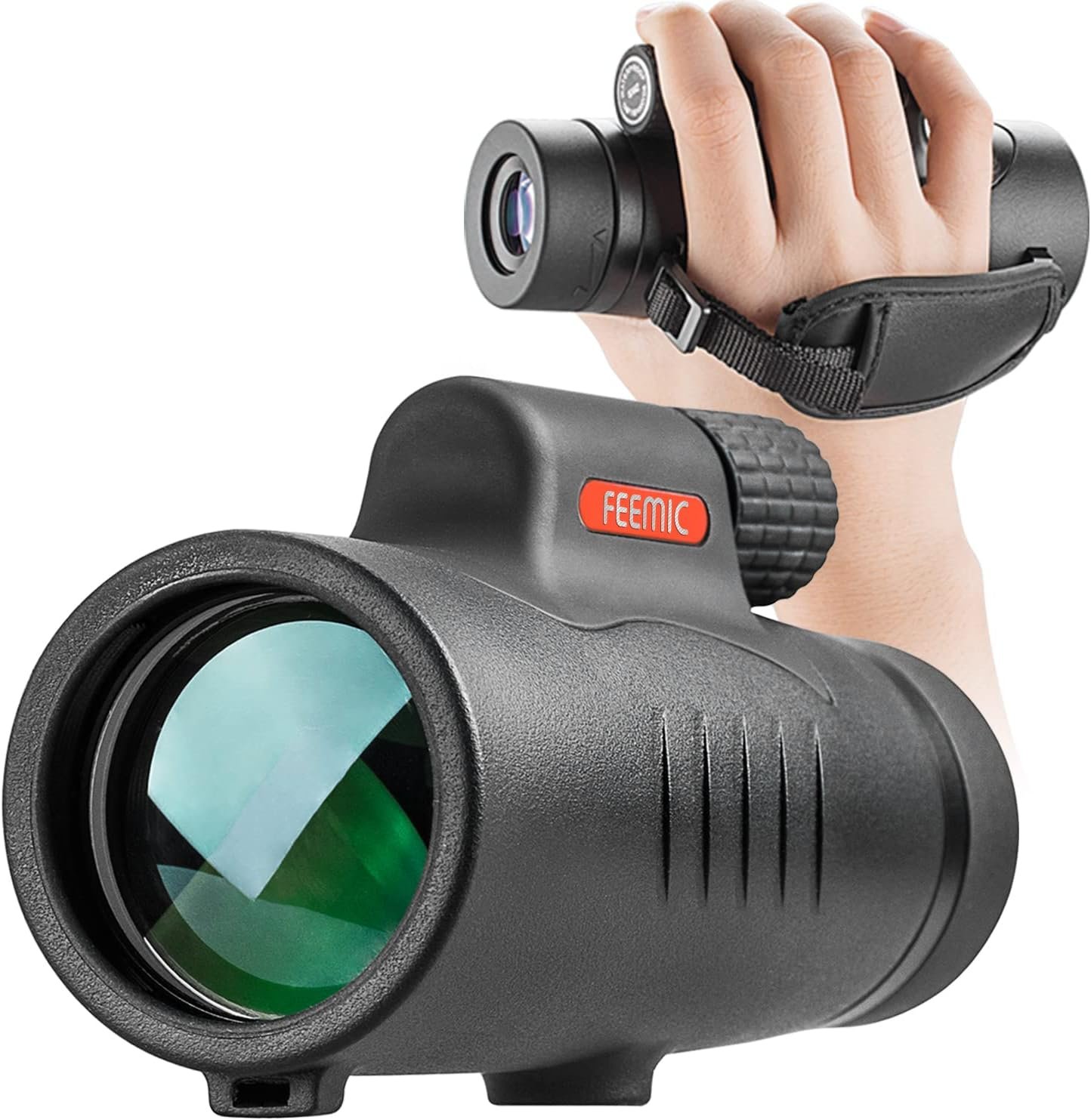
    The 8×42 Monocular Telescope described for this product combines 8x magnification with a 42mm objective lens. It is presented as a compact outdoor monocular with features including waterproof, fogproof, and shockproof construction, along with a hand strap. The product is marketed for a range of activities, including birdwatching, hunting, camping, hiking, travel, wildlife observation, and scenery viewing.

    An 8×42 configuration is worth understanding because the numbers describe two important characteristics of the optical system. The 8x figure refers to magnification, while the 42mm figure refers to the diameter of the objective lens. Together, these characteristics influence how distant objects appear and how much light can enter the optical system.

    This guide explores the product from an informational perspective. It explains how an 8×42 monocular works, where a compact monocular can be useful, what waterproof and fogproof construction means in practical terms, how it compares with binoculars and spotting scopes, and what users should consider before choosing this type of outdoor optical equipment.

    What Is a Monocular Telescope?

    A monocular is a compact optical instrument designed to magnify distant subjects through a single viewing channel.

    The basic concept is similar to one half of a pair of binoculars. Light enters through the objective lens at the front, travels through the internal optical system, and reaches the observer through the eyepiece.

    Because there is only one optical channel, a monocular can be smaller and lighter than binoculars offering a similar magnification level.

    This makes monoculars particularly interesting for people who prioritize portability.

    A compact monocular can be carried in a backpack, attached to outdoor gear, or held in one hand while the other hand remains available for other tasks.

    Common applications include:

    • Birdwatching
    • Wildlife observation
    • Hiking
    • Camping
    • Travel
    • Landscape viewing
    • Outdoor recreation
    • Sporting events
    • General long-distance observation

    The exact usefulness depends on the optical specifications and the environment in which the monocular is used.

    Understanding the 8×42 Configuration

    The two numbers in 8×42 provide useful information about the optical system.

    The first number, 8x, refers to magnification.

    The second number, 42mm, refers to the diameter of the objective lens.

    Understanding both is important when comparing monoculars.

    What Does 8x Magnification Mean?

    An 8x magnification means that a distant object appears approximately eight times larger through the optical system than it would appear to the unaided eye under the same viewing conditions.

    For example, an object located far across a field may appear significantly closer when viewed through an 8x monocular.

    However, magnification should not be confused with image quality.

    A higher magnification does not automatically mean a clearer image. Stability, optical quality, lighting, atmospheric conditions, and focus all influence what the observer actually sees.

    An 8x magnification is therefore a useful middle ground for many outdoor activities. It provides meaningful enlargement while generally remaining manageable for handheld use.

    What Does the 42mm Objective Mean?

    The second number refers to the objective lens diameter.

    A 42mm objective lens provides a relatively substantial opening for collecting light compared with smaller compact monoculars.

    The objective lens is located at the front of the monocular and plays an important role in determining how much light enters the optical system.

    A larger objective can be useful when observing during lower-light conditions, although it also tends to increase the physical size of the optical instrument.

    This creates a familiar trade-off in outdoor optics:

    larger objective = potentially more light, but generally more bulk.

    The 42mm size provides a balance between these factors.

    Key Features

    8x Magnification

    The 8x magnification provides enough enlargement for many common outdoor viewing situations without reaching the very high magnification levels found in spotting scopes.

    This can make it practical for users who want to examine distant objects while still being able to scan an area relatively naturally.

    For wildlife observation, for example, 8x magnification can provide additional detail while remaining useful for locating animals across an open landscape.

    42mm Objective Lens

    The 42mm objective lens provides a larger light-gathering opening than many very small pocket monoculars.

    This can be helpful when viewing subjects in shaded environments or during changing daylight conditions.

    However, users should not assume that a larger objective automatically guarantees a bright or sharp image. Optical design, lens quality, coatings, atmospheric conditions, and the observer’s environment all contribute to the final image.

    Compact Form Factor

    Portability is one of the primary reasons people choose monoculars.

    A monocular can occupy less space than a comparable binocular setup, making it easier to include in a daypack or travel bag.

    For hikers and travelers, this can be particularly useful because every additional piece of equipment contributes to the total weight being carried.

    A compact monocular provides magnification without requiring the larger footprint of a spotting scope and tripod.

    Waterproof Construction

    The product description identifies the monocular as waterproof.

    Water resistance can be particularly relevant for outdoor equipment because users may encounter rain, wet vegetation, splashes, or other moisture during outdoor activities.

    However, waterproof claims should not automatically be interpreted as permission to submerge the device.

    The exact level of water resistance depends on the manufacturer’s construction and specifications.

    Users should follow the manufacturer’s guidance regarding exposure to water.

    Fogproof Construction

    Fogging can be a problem when optical equipment moves between different temperatures.

    For example, an outdoor user may take equipment from a cool environment into a warmer or more humid setting.

    Internal fogging can interfere with visibility because condensation may form within the optical system.

    A fogproof design is intended to help reduce this problem under the conditions for which the product was designed.

    It is still sensible to avoid unnecessary exposure to extreme temperature changes whenever practical.

    Shockproof Design

    The product is also described as shockproof.

    This feature is relevant for outdoor equipment because hiking, camping, and travel can expose gear to accidental knocks and bumps.

    A shock-resistant construction can provide additional protection from ordinary handling incidents.

    However, shockproof should not be interpreted as indestructible. Optical instruments still require careful handling, particularly because lenses and internal components can be damaged by significant impacts.

    Hand Strap

    A hand strap can provide additional convenience when using or carrying the monocular.

    It can help users maintain a more secure grip while viewing distant subjects.

    For activities such as hiking or sightseeing, a strap can also reduce the chance of accidentally dropping the device when changing positions.

    Users should make sure the strap is properly secured before relying on it.

    How It Can Be Used for Birdwatching

    Birdwatching is one of the most natural applications for a compact monocular.

    Birds often remain at distances where the unaided eye cannot provide enough detail to identify markings, behavior, or other characteristics.

    An 8x monocular can bring distant birds closer visually without requiring the observer to approach them.

    Locating Birds

    The moderate magnification of 8x can remain practical for scanning trees, fields, wetlands, and open areas.

    This is important because birdwatching often involves moving subjects.

    Extremely high magnification can make it difficult to initially locate a bird because the visible area becomes smaller.

    An 8x configuration can offer a useful balance between magnification and field awareness.

    Observing From a Distance

    Birdwatchers can also use a monocular to maintain an appropriate distance from wildlife.

    Rather than approaching a bird closely, the observer can remain farther away and use the optical system to examine it.

    This can reduce disturbance and make observation more practical.

    Wildlife Observation

    Wildlife observation often takes place across large open spaces.

    A deer at the edge of a forest, an animal across a valley, or birds near a wetland may be difficult to examine closely with the naked eye.

    A compact monocular can help bridge this distance.

    The portability of a monocular is particularly relevant for wildlife enthusiasts who spend significant time walking.

    Instead of carrying a full spotting scope and tripod, the user can keep a smaller optical device readily available.

    The trade-off is that a monocular generally does not provide the same level of high magnification available from a dedicated spotting scope.

    Hiking Applications

    Hiking involves constant movement, changing scenery, and limited carrying capacity.

    A monocular can fit naturally into this environment.

    Users can take it out when reaching a viewpoint, crossing an open landscape, or encountering distant wildlife.

    The compact form means it does not necessarily need to remain mounted on a tripod.

    For a hiking-focused user, this flexibility can be more valuable than extremely high magnification.

    Camping and Outdoor Recreation

    Camping environments often provide opportunities for long-distance observation.

    A monocular can be used to examine:

    • Distant mountains
    • Trees and wildlife
    • Birds
    • Shorelines
    • Rock formations
    • Scenic viewpoints
    • Outdoor activity areas

    Because the device is compact, it can be kept with other camping equipment without requiring the dedicated space associated with larger optical systems.

    Travel and Sightseeing

    Travelers often want optical equipment that is useful without becoming another major piece of luggage.

    A compact monocular can be suitable for sightseeing at:

    • Scenic viewpoints
    • Coastal areas
    • Parks
    • Historical locations
    • Observation decks
    • Mountain landscapes
    • Large outdoor attractions

    The single-eye design can also allow the user to quickly observe a distant subject without setting up equipment.

    Landscape and Scenery Viewing

    An 8x magnification level can also work well for scenic observation.

    At a viewpoint, for example, a monocular can be used to inspect distant mountains, buildings, cliffs, boats, or other landscape features.

    The 42mm objective lens may also help provide a useful amount of light during ordinary daylight observation.

    As with all long-distance optics, haze and atmospheric conditions can affect the image.

    Hunting and Field Observation

    The product description also identifies hunting as one of its potential uses.

    In outdoor field environments, a compact monocular can help users inspect distant terrain or observe wildlife without carrying a larger optical system.

    However, it is important to distinguish observation from other hunting equipment.

    A monocular is an optical observation tool. It should not be considered a substitute for equipment specifically designed for range measurement, navigation, or other specialized tasks.

    Hunters should also follow all applicable laws, regulations, land-access requirements, and safety practices in their location.

    Who May Find an 8×42 Monocular Suitable?

    Birdwatchers

    People who want a portable way to observe birds at a distance may find the 8x configuration practical for casual and recreational birdwatching.

    Hikers

    Hikers who want magnification without carrying a large optical setup may appreciate the compact format.

    Travelers

    Travelers can use a monocular for sightseeing, landscapes, wildlife, and distant points of interest.

    Campers

    Campers may find it useful for viewing wildlife and scenery around campsites and outdoor areas.

    Nature Enthusiasts

    People who enjoy observing the natural environment can use a monocular as a general-purpose viewing tool.

    Families and Younger Users

    The product description includes adults and kids among its intended audience.

    For younger users, supervision may be appropriate depending on age and the environment. The monocular is an optical instrument and should be handled carefully.

    Important Things to Consider

    Handheld Stability

    An 8x monocular is generally easier to hold steadily than very high-magnification optical equipment.

    Nevertheless, hand movement can still be visible.

    Users can improve stability by holding the monocular with both hands when practical, resting an arm against a stable surface, or using another support point.

    Lighting Conditions

    Optical performance changes with lighting.

    Bright daylight generally provides more favorable viewing conditions than dusk or heavily shaded environments.

    Although the 42mm objective can gather a meaningful amount of light, the monocular should not be treated as a night-vision device.

    Atmospheric Conditions

    Distance viewing is affected by the atmosphere.

    Haze, humidity, heat shimmer, dust, and fog can reduce visibility.

    Sometimes reducing the viewing distance or choosing a different time of day can make a greater difference than changing optical equipment.

    Waterproof Does Not Mean Unlimited Water Exposure

    Even when a monocular is described as waterproof, users should follow the manufacturer’s specific limitations.

    Avoid unnecessary immersion or prolonged exposure to water unless the manufacturer explicitly states that such use is supported.

    After exposure to rain or moisture, allowing the exterior to dry properly can help protect the equipment.

    Shockproof Does Not Mean Indestructible

    Outdoor equipment can be exposed to bumps and falls.

    A shock-resistant design can provide additional protection, but users should still avoid intentionally dropping or striking the monocular.

    Optical alignment is important, and significant impact can potentially affect performance.

    Size Versus Optical Capability

    A 42mm objective provides more optical capacity than very small pocket monoculars, but it also means the device may not be as tiny as the smallest travel optics.

    Users should consider whether the balance between size and optical performance matches their intended activity.

    Comparing Monoculars With Binoculars

    Monoculars and binoculars are both popular choices for outdoor observation, but their designs differ.

    Monocular Advantages

    A monocular typically offers:

    • Compact size
    • Lower carrying weight
    • Single-hand operation
    • Simple storage
    • Convenient use during travel

    It can be particularly appealing when portability is more important than extended two-eye viewing.

    Binocular Advantages

    Binoculars use two optical channels.

    This allows both eyes to participate in the viewing process and can feel more natural for longer observation sessions.

    Binoculars can also be useful when quickly scanning large areas.

    Which Category Makes Sense?

    The choice depends on the activity.

    Someone hiking long distances may prioritize compactness and choose a monocular.

    Someone sitting at a fixed location for extended wildlife observation may prefer binoculars.

    Neither category is universally superior.

    Comparing Monoculars With Spotting Scopes

    Spotting scopes typically provide much higher magnification than compact monoculars.

    A spotting scope may be more suitable for:

    • Long-distance target observation
    • Detailed wildlife viewing
    • Stationary observation
    • High-magnification landscape viewing

    A monocular generally offers greater portability.

    An 8×42 monocular can be taken on a hike without the need for a dedicated tripod, while a high-magnification spotting scope is often paired with stable support.

    This makes the two categories complementary rather than direct replacements.

    Comparing 8x and Higher Magnification

    Higher magnification can make distant subjects appear larger, but it also introduces trade-offs.

    At higher magnification:

    • Hand movement becomes more noticeable.
    • The field of view becomes narrower.
    • Locating moving subjects can become more difficult.
    • Atmospheric distortion becomes more apparent.
    • Stable support becomes increasingly important.

    An 8x monocular therefore offers a relatively balanced configuration for general outdoor observation.

    It is not intended to provide the extreme close-up view associated with high-power spotting scopes.

    Practical Tips for Using an 8×42 Monocular

    Start With a Broad View

    When looking for an object, begin by identifying its general location with the naked eye.

    Then bring the monocular to your eye while keeping the target centered.

    This is often easier than searching for a moving object entirely through the magnified view.

    Focus Carefully

    Take a moment to adjust the focus until the subject appears as clear as possible.

    Small focus adjustments can make a significant difference when examining distant objects.

    Use Stable Hand Positioning

    Hold the monocular securely without squeezing excessively.

    Keeping your elbows closer to your body can help reduce movement.

    Avoid Looking Directly at the Sun

    Never use optical equipment to look directly at the sun.

    Concentrated sunlight can cause serious and potentially permanent eye injury.

    This is an important safety rule for monoculars, binoculars, spotting scopes, and telescopes.

    Keep the Lens Clean

    Dust, fingerprints, and smudges can reduce image quality.

    Optical lenses should be cleaned using appropriate optical cleaning methods rather than household paper products or abrasive materials.

    Maintenance and Storage

    Outdoor optical equipment benefits from proper storage.

    When the monocular is not being used, keeping it protected from unnecessary dust and moisture can help preserve its condition.

    If it becomes wet, allow it to dry appropriately before storing it for long periods.

    The optical surfaces should be handled carefully.

    Avoid touching the lenses unnecessarily because fingerprints can leave oils that interfere with viewing.

    When cleaning is necessary, use materials intended for optical lenses and follow the manufacturer’s recommendations.

    Frequently Asked Questions

    What does 8×42 mean on a monocular?

    The 8x refers to the magnification, while 42mm refers to the diameter of the objective lens.

    Is 8x magnification suitable for birdwatching?

    An 8x magnification can be practical for birdwatching because it provides useful enlargement while remaining manageable for locating and following subjects.

    Can this monocular be used for hiking?

    Yes. Its compact format makes it suitable for outdoor activities such as hiking, where portability is important.

    Is the monocular waterproof?

    The product is described as waterproof. Users should still follow the manufacturer’s guidance regarding the level and duration of water exposure.

    Is it fogproof?

    Yes. The product description identifies the monocular as fogproof. This is intended to help reduce fogging under appropriate conditions.

    Is it shockproof?

    The product is described as shockproof. This can provide additional protection against ordinary bumps, but optical equipment should still be handled carefully.

    Can children use an 8×42 monocular?

    The product is described for adults and kids. Younger users should handle optical equipment carefully and may require supervision depending on their age and surroundings.

    Can it be used for hunting?

    The product description includes hunting as a potential application. It can be used as an observation tool for viewing distant terrain or wildlife. Users should follow applicable hunting regulations and safety requirements.

    Is an 8×42 monocular better than binoculars?

    Not necessarily. A monocular is generally more compact and portable, while binoculars provide two-eye viewing and may be more comfortable for some extended observation tasks.

    Is a monocular better than a spotting scope?

    They serve different purposes. A monocular prioritizes portability and general-purpose observation, while spotting scopes generally offer much higher magnification and are often used with tripods.

    Can it be used at night?

    An ordinary monocular is not a night-vision device. It requires available light to produce a visible image and should not be expected to provide normal viewing in complete darkness.

    Can the monocular be used to look at the sun?

    No. Users should never look directly at the sun through a monocular or any other unfiltered optical device because it can cause serious eye injury.

    Does a larger objective lens always mean a better image?

    No. Objective size is only one factor. Optical quality, lens design, coatings, atmospheric conditions, focus, and lighting all influence the viewing experience.

    Is the 42mm objective suitable for outdoor use?

    A 42mm objective provides a balance between light-gathering capability and portability, making this type of configuration suitable for many outdoor observation activities.

    What can affect image clarity?

    Several factors can influence clarity, including focus, hand movement, lighting, lens cleanliness, haze, humidity, heat shimmer, and the distance to the subject.

    Conclusion

    The 8×42 Monocular Telescope is designed around a practical combination of moderate magnification, a 42mm objective lens, and a compact single-eye viewing format. Its described waterproof, fogproof, and shock-resistant characteristics also make it oriented toward outdoor activities where equipment may encounter changing environmental conditions.

    An 8x magnification level can be useful for a broad range of applications. Birdwatchers can use it to observe distant birds, hikers can carry it for scenic viewing, campers can use it for wildlife observation, and travelers can keep it available for distant landmarks and landscapes.

    The 42mm objective adds another dimension to the configuration by providing a relatively substantial light-gathering opening while keeping the overall concept more portable than a full-size spotting scope.

    At the same time, users should understand the natural limitations of compact optical equipment. An 8x monocular cannot provide the same high-magnification detail as a large spotting scope, and waterproof or shock-resistant construction does not mean that the device should be exposed to unlimited water or severe impacts.

    Compared with binoculars, the main appeal of a monocular is its compact, single-channel design. Compared with spotting scopes, its strength is portability and simplicity rather than extreme magnification.

    For people who want a convenient optical tool for birdwatching, wildlife, hiking, camping, travel, landscape observation, and other outdoor activities, an 8×42 monocular can represent a practical category to consider.

    The most important step is matching the optical configuration to the activity. Understanding magnification, objective size, stability, lighting, weather conditions, and portability can help users make a more informed decision before adding a monocular to their outdoor equipment.
    You can check more details on Amazon here.

  • SVBONY SV28 Spotting Scope 25-75×70: A Practical Guide to High-Magnification Viewing

    SVBONY SV28 Spotting Scope 25-75×70: A Practical Guide to High-Magnification Viewing

    Introduction

    When distant subjects need to be viewed in greater detail, a spotting scope can offer a useful middle ground between ordinary binoculars and larger astronomical telescopes. These compact optical instruments are commonly used for activities such as birdwatching, wildlife observation, landscape viewing, target observation, and other situations where a stable, magnified view is helpful.

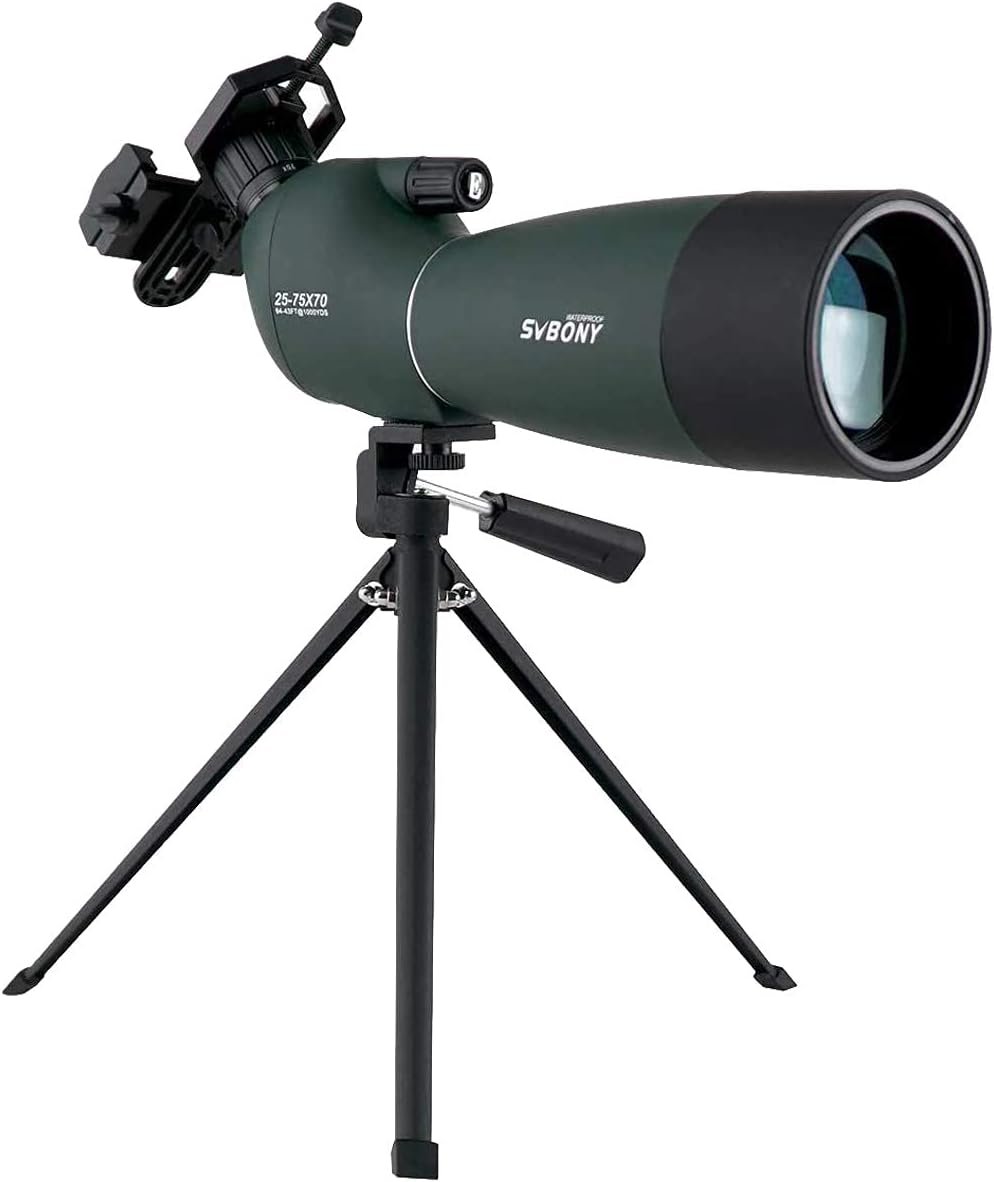
    The SVBONY SV28 Spotting Scope is an angled spotting scope featuring a 25-75x magnification range and a 70mm objective lens. The product is also supplied with a tripod, making it intended for stationary viewing rather than handheld use.

    A variable magnification range gives users the ability to adjust the field of view according to the distance and size of the subject. At lower magnification, it can be easier to locate and follow a distant object. Increasing the magnification can provide a closer view when conditions and atmospheric clarity allow.

    The 70mm objective lens is another important part of the optical system. The objective lens is responsible for gathering light before the image reaches the eyepiece, and its diameter can influence the amount of light available to the optical system.

    Although the product is marketed for applications including target shooting, a spotting scope with this type of configuration can have broader uses. It may also be relevant to birdwatchers, wildlife observers, outdoor enthusiasts, range users, and people interested in viewing distant landscapes.

    This guide looks at the SVBONY SV28 from an informational perspective. It explains the scope’s main characteristics, how a 25-75×70 configuration works, the role of the tripod and angled design, potential applications, practical considerations, and how spotting scopes compare with other types of optical equipment.

    What Is a Spotting Scope?

    A spotting scope is a compact telescope-like optical instrument designed primarily for terrestrial viewing.

    Unlike many astronomical telescopes, spotting scopes are generally designed to be practical for looking across landscapes and observing distant objects during daylight.

    They are commonly used for:

    • Birdwatching
    • Wildlife observation
    • Target observation
    • Landscape viewing
    • Outdoor recreation
    • Sporting events
    • Nature observation
    • Long-distance visual inspection

    A spotting scope typically uses an objective lens at the front and an eyepiece at the rear. Light enters through the objective lens, travels through the optical system, and reaches the observer’s eye through the eyepiece.

    One of the advantages of this design is the ability to provide substantially more magnification than ordinary binoculars while remaining more compact than many full-size telescopes.

    Understanding the 25-75x Magnification Range

    One of the most notable characteristics of the SV28 is its variable magnification.

    The scope offers a range from 25x to 75x.

    Magnification describes how much larger a distant subject appears through the optical system compared with viewing it without magnification.

    For example, a 25x setting provides a substantially enlarged view compared with the naked eye. Increasing the magnification toward 75x creates a much closer view of distant details when viewing conditions allow.

    However, higher magnification does not automatically mean a clearer or more useful image.

    Lower Magnification

    At approximately the lower end of the range, the field of view is generally wider than at higher magnification.

    This can make it easier to locate a subject.

    For example, when observing a bird in a large tree, it may be easier to find the bird using a lower magnification setting before gradually increasing magnification.

    The same principle can apply when locating a distant target or scanning a landscape.

    Higher Magnification

    At higher settings, the subject occupies more of the viewing area.

    This can be useful when the observer needs to examine a relatively small or distant object.

    However, high magnification also makes movement more noticeable. Even small vibrations in the tripod, wind, or atmospheric movement can become more apparent.

    This is why a stable support system becomes increasingly important as magnification increases.

    The 70mm Objective Lens

    The SV28 uses a 70mm objective lens.

    The objective lens is the large front lens of a spotting scope. Its job is to collect incoming light and contribute to the formation of the image viewed through the eyepiece.

    A larger objective can potentially gather more light than a smaller objective, although optical performance depends on the entire design of the scope rather than objective diameter alone.

    The 70mm size places the SV28 in a configuration intended to balance light-gathering capability with portability.

    A larger objective can be useful when viewing distant subjects under changing lighting conditions, but it can also contribute to increased overall size and weight.

    For outdoor users, this creates a practical trade-off between optical capability and transport convenience.

    Angled Spotting Scope Design

    The SV28 uses an angled viewing configuration.

    In an angled spotting scope, the eyepiece is positioned above the main optical tube rather than being aligned directly behind it.

    This design can provide several practical advantages.

    Comfortable Viewing Position

    When the scope is mounted on a tripod, an angled eyepiece can allow the observer to look downward into the eyepiece rather than standing directly behind the scope.

    This can be particularly useful when observing for extended periods.

    Easier Sharing Between Users

    An angled scope can also make it easier for people of different heights to use the same setup.

    Instead of changing the entire tripod height significantly, users can sometimes adjust their viewing position while leaving the scope and tripod relatively stable.

    This can be helpful when several people are observing the same distant subject.

    Elevated Viewing

    An angled design can also work well when the scope is pointed upward or downward at different elevations.

    This can be useful for birdwatching and wildlife observation, where subjects may be located at different heights.

    The Included Tripod

    High magnification makes stability extremely important.

    The SV28 is supplied with a tripod, providing a support system for stationary viewing.

    Using a tripod instead of attempting to hold a spotting scope by hand can significantly reduce visible movement.

    At 25x, minor hand movement may already be noticeable. At 75x, even very small movements can become much more obvious.

    A tripod therefore serves an important practical purpose rather than simply being an accessory.

    Why Stability Matters

    Suppose an observer is looking at a distant object through a scope at high magnification.

    The subject itself may be perfectly stationary, but vibration in the optical system can make the image appear to move.

    A stable tripod helps reduce this problem.

    Users should place the tripod on a reasonably firm surface whenever possible. Soft ground, uneven terrain, strong wind, or accidental contact with the tripod can still introduce movement.

    How the SV28 Can Be Used for Target Observation

    Target shooting is one of the applications associated with this spotting scope.

    A spotting scope can allow users to observe distant targets without repeatedly moving closer to inspect them.

    At a suitable shooting range, the scope can be positioned behind the shooting area and used to inspect targets from a distance.

    The variable magnification can be useful because different distances may require different viewing settings.

    At a relatively short distance, lower magnification may provide enough detail while maintaining a broader field of view. At longer distances, increasing magnification may help the observer examine smaller features.

    Actual visibility will depend on several factors, including target size, distance, lighting, atmospheric conditions, and the quality of the viewing setup.

    Range Use Considerations

    For range use, the tripod should be positioned safely and securely away from areas where it could interfere with movement or equipment.

    The scope should also be used only in accordance with the safety rules and procedures of the relevant range.

    The optical equipment itself does not replace proper firearm safety practices.

    Birdwatching Applications

    Birdwatchers often need to observe small subjects from a distance.

    A spotting scope can provide significantly more magnification than many common binocular configurations.

    The lower end of the SV28’s magnification range can be useful for initially locating a bird. Once the subject has been found, the observer can increase magnification to examine details.

    Birdwatching also demonstrates why field of view matters.

    A very high magnification setting may make it more difficult to locate a moving bird because the visible area becomes narrower.

    Using the lower end of the range first and increasing magnification afterward can therefore be a practical approach.

    Wildlife Observation

    Wildlife observation is another possible use.

    Distant animals can sometimes be observed without approaching them closely, which may be helpful for maintaining an appropriate viewing distance.

    The scope can be positioned on a tripod overlooking a field, valley, forest edge, wetland, or other suitable landscape.

    However, high magnification is strongly affected by atmospheric conditions.

    Heat waves rising from the ground can distort distant images, particularly during warm weather. Haze and humidity can also reduce clarity.

    As a result, a higher magnification setting does not always provide more useful information.

    Landscape Viewing

    The scope can also be used for viewing distant landscapes.

    A 25x setting may allow an observer to examine hills, cliffs, buildings, coastlines, or other distant features while maintaining a relatively manageable field of view.

    Higher settings can be used when the observer wants to inspect a smaller area.

    Landscape viewing can be especially useful when the scope is positioned at a stable observation point.

    Outdoor and Recreational Use

    A spotting scope can be useful for a range of outdoor activities beyond specialized observation.

    Possible applications include:

    • Nature observation
    • Scenic viewing
    • Hiking destinations
    • Coastal observation
    • Outdoor sporting events
    • Field observation
    • General long-distance viewing

    Its usefulness depends on how much magnification the user actually needs.

    For casual users who rarely need to inspect distant subjects, ordinary binoculars may be simpler to carry. For users who regularly need higher magnification, a spotting scope can provide another level of viewing capability.

    Who May Find the SV28 Suitable?

    Target Shooters

    Users who need to observe distant targets at a shooting range may find the variable magnification useful.

    The tripod is particularly relevant because stable viewing is important when examining target details from a distance.

    Birdwatchers

    Birdwatchers who regularly observe distant birds may appreciate the combination of high magnification and a tripod-supported setup.

    However, users who frequently track fast-moving birds may prefer equipment with a wider field of view.

    Wildlife Observers

    The scope may be suitable for people who observe animals from fixed locations.

    A tripod-supported spotting scope can work well for stationary observation rather than fast-moving subjects.

    Nature Enthusiasts

    Outdoor users interested in landscapes, wildlife, and distant scenery may also find this type of optical configuration useful.

    Users Seeking More Magnification Than Binoculars

    People who find ordinary binoculars insufficient for their typical viewing distances may consider a spotting scope as a step toward higher magnification.

    Important Things to Consider

    High Magnification Has Trade-Offs

    The 25-75x range provides considerable magnification, but users should understand that high magnification can make image movement and atmospheric distortion more noticeable.

    Higher magnification is not always the best setting.

    In many situations, a moderately high setting can provide a more usable image than pushing the scope to its maximum magnification.

    Atmospheric Conditions Matter

    Long-distance viewing takes place through the atmosphere.

    Heat shimmer, humidity, haze, dust, and temperature differences can all affect what the observer sees.

    This is particularly important at high magnification.

    An observer may initially assume that a blurry image is caused by the scope, when atmospheric distortion is actually limiting visibility.

    Stability Is Essential

    A spotting scope in the 25-75x range should generally be used with stable support.

    The included tripod is therefore an important part of the overall setup.

    Users should avoid placing the tripod where foot traffic, wind, or unstable ground can introduce unnecessary movement.

    Portability

    A 70mm objective lens provides a relatively substantial optical system.

    That can be beneficial for light gathering, but users should also consider the total size and weight of the scope and tripod when planning outdoor trips.

    For long hikes, compact binoculars may sometimes be more convenient.

    For observation from a fixed location, the larger optical setup may be easier to justify.

    Eye Relief and Viewing Comfort

    Eye relief describes the distance between the eyepiece and the position where the observer’s eye can see the full image.

    Viewing comfort can vary between individuals.

    People who wear glasses should pay particular attention to how the eyepiece accommodates glasses and whether the available eye relief works comfortably for them.

    Field of View

    Field of view generally becomes narrower as magnification increases.

    This is normal for variable-magnification spotting scopes.

    At 25x, locating a subject can be easier. At 75x, the visible area is narrower, making subject tracking more demanding.

    This is especially relevant for birds and moving wildlife.

    Comparing Spotting Scopes With Binoculars

    Binoculars and spotting scopes serve overlapping but different purposes.

    Binoculars

    Binoculars are generally:

    • Easier to carry
    • Faster to use
    • Convenient for scanning large areas
    • Useful for moving subjects
    • Suitable for general outdoor observation

    They also provide viewing through both eyes, which many people find comfortable.

    Spotting Scopes

    Spotting scopes generally emphasize:

    • Higher magnification
    • Detailed long-distance viewing
    • Tripod-supported observation
    • Stationary viewing
    • Target observation
    • Wildlife and landscape detail

    The trade-off is that they are generally less convenient for quick handheld scanning.

    The right choice depends on the user’s priorities rather than a simple ranking between the two categories.

    Comparing Variable and Fixed Magnification

    Another important distinction is between variable-power and fixed-magnification optical equipment.

    Fixed Magnification

    A fixed-power scope provides one magnification level.

    Its operation can be straightforward because there is no need to adjust the zoom.

    However, users cannot change the field of view or magnification depending on the situation.

    Variable Magnification

    A variable-power spotting scope allows the user to adjust magnification.

    The SV28’s 25-75x range provides flexibility for different viewing distances and subjects.

    The trade-off is that users must learn how to choose an appropriate setting.

    For many situations, starting at a lower magnification and increasing it gradually can be more practical than immediately selecting the highest setting.

    Comparing Straight and Angled Spotting Scopes

    Straight spotting scopes position the eyepiece roughly in line with the main optical tube.

    Angled scopes position the eyepiece upward at an angle.

    Straight Design

    Straight scopes can be intuitive for users who are accustomed to conventional optical equipment.

    They may also be convenient for some low-angle or quick-targeting situations.

    Angled Design

    Angled scopes can provide a comfortable viewing position when mounted on a tripod.

    They can also make sharing the scope between users of different heights easier.

    Neither design is universally appropriate for every activity. The choice depends on how the scope will be positioned and used.

    Getting the Most From a Variable-Power Spotting Scope

    A few simple habits can make long-distance viewing more manageable.

    Start With Lower Magnification

    When searching for a subject, start near the lower end of the magnification range.

    This provides a wider viewing area and can make the subject easier to locate.

    Center the Subject

    Once the subject is visible, center it before increasing magnification.

    This reduces the likelihood of losing the subject when changing the zoom level.

    Increase Magnification Gradually

    Rather than immediately moving to maximum magnification, increase it gradually.

    If atmospheric conditions or vibration begin reducing image quality, returning to a lower setting may actually produce a more useful view.

    Use a Stable Surface

    Keep the tripod firmly positioned.

    Avoid placing it on unstable surfaces whenever possible.

    Give Your Eyes Time

    When observing fine details for an extended period, taking short breaks can make viewing more comfortable.

    Maintenance and Storage

    Optical equipment benefits from careful handling.

    The lenses should be protected from unnecessary contact, dust, moisture, and scratches.

    When not in use, storing the scope in a suitable protective environment can help reduce exposure to environmental conditions.

    Users should follow the manufacturer’s cleaning recommendations rather than applying household cleaners or rough materials to optical surfaces.

    A clean lens can make a noticeable difference, particularly when viewing bright or high-contrast subjects.

    Frequently Asked Questions

    What is the magnification of the SVBONY SV28?

    The SV28 is designed with a variable magnification range of 25x to 75x.

    What size objective lens does it use?

    The spotting scope uses a 70mm objective lens.

    Is the SV28 an angled spotting scope?

    Yes. The model uses an angled viewing configuration.

    Does it include a tripod?

    The listed product configuration includes a tripod.

    Can the SV28 be used for target shooting?

    Yes. Target observation is one of the intended applications for this type of spotting scope. It can allow users to examine distant targets from an appropriate observation position.

    Can it be used for birdwatching?

    Yes. Spotting scopes are commonly used for birdwatching, and the variable magnification can help users locate and then examine distant birds.

    Is 75x magnification always better than 25x?

    Not necessarily. Higher magnification narrows the field of view and makes vibration and atmospheric distortion more noticeable. The most useful setting depends on the subject and conditions.

    Why is a tripod important?

    At high magnification, small movements become more visible. A tripod provides stability and can make detailed observation more practical.

    Can it be used without a tripod?

    A spotting scope with this level of magnification is generally much more practical when supported by a tripod. Handholding at high magnification can introduce substantial movement.

    Is an angled spotting scope useful for birdwatching?

    It can be. An angled configuration can provide a comfortable viewing position when the scope is mounted on a tripod, particularly during extended observation.

    Can the scope be used for landscapes?

    Yes. Long-distance landscape observation is another potential application.

    Does high magnification eliminate atmospheric distortion?

    No. Atmospheric conditions can limit long-distance visibility regardless of the scope’s maximum magnification.

    Is this type of spotting scope portable?

    It is designed for outdoor use, but the combination of a 70mm objective and tripod means it is generally more substantial than compact binoculars.

    Is a spotting scope better than binoculars?

    Neither category is automatically better for every situation. Binoculars are often more convenient for scanning and moving subjects, while spotting scopes are useful when higher magnification and tripod-supported viewing are priorities.

    Can beginners use a spotting scope?

    Yes. Beginners can use one, although learning how to locate subjects at high magnification and adjust the zoom effectively may take some practice.

    What should users do if the image becomes blurry at high magnification?

    They can try reducing magnification, improving tripod stability, refocusing, and checking whether atmospheric conditions are affecting the image.

    Conclusion

    The SVBONY SV28 Spotting Scope combines a 25-75x variable magnification range, a 70mm objective lens, an angled viewing design, and tripod-supported operation into an optical system intended for detailed long-distance observation.

    Its potential applications extend beyond target observation. Depending on the environment and viewing requirements, it can also be used for birdwatching, wildlife observation, landscape viewing, nature study, and other outdoor activities where a more magnified view is useful.

    The variable magnification is particularly important because different situations require different viewing approaches. Lower magnification can make it easier to locate subjects and maintain a wider field of view, while higher magnification can be useful for examining distant details when atmospheric conditions and stability permit.

    The 70mm objective lens provides a substantial optical aperture, while the angled design can offer a comfortable viewing position when the scope is mounted on its tripod. At the same time, users should keep realistic expectations about high-magnification optics. Atmospheric distortion, vibration, lighting, and subject movement can all affect the final viewing experience.

    For anyone evaluating a spotting scope, the most important question is not simply how high the magnification goes. It is how the entire optical setup fits the intended activity. A target observer may prioritize detailed stationary viewing, while a birdwatcher may place greater importance on locating and tracking moving subjects. A landscape enthusiast may value a balance between magnification, portability, and viewing comfort.

    Understanding these differences can help users make a more informed decision about whether a 25-75×70 angled spotting scope fits their particular outdoor or long-distance viewing needs.

    You can check more details on Amazon here.